Need Reliable Gutter Help in Mesquite?
Our technicians are deployed across Mesquite and surrounding North Texas communities. Connect directly with our local field dispatch desk for rapid evaluation, storm damage assessments, and clear project estimates.
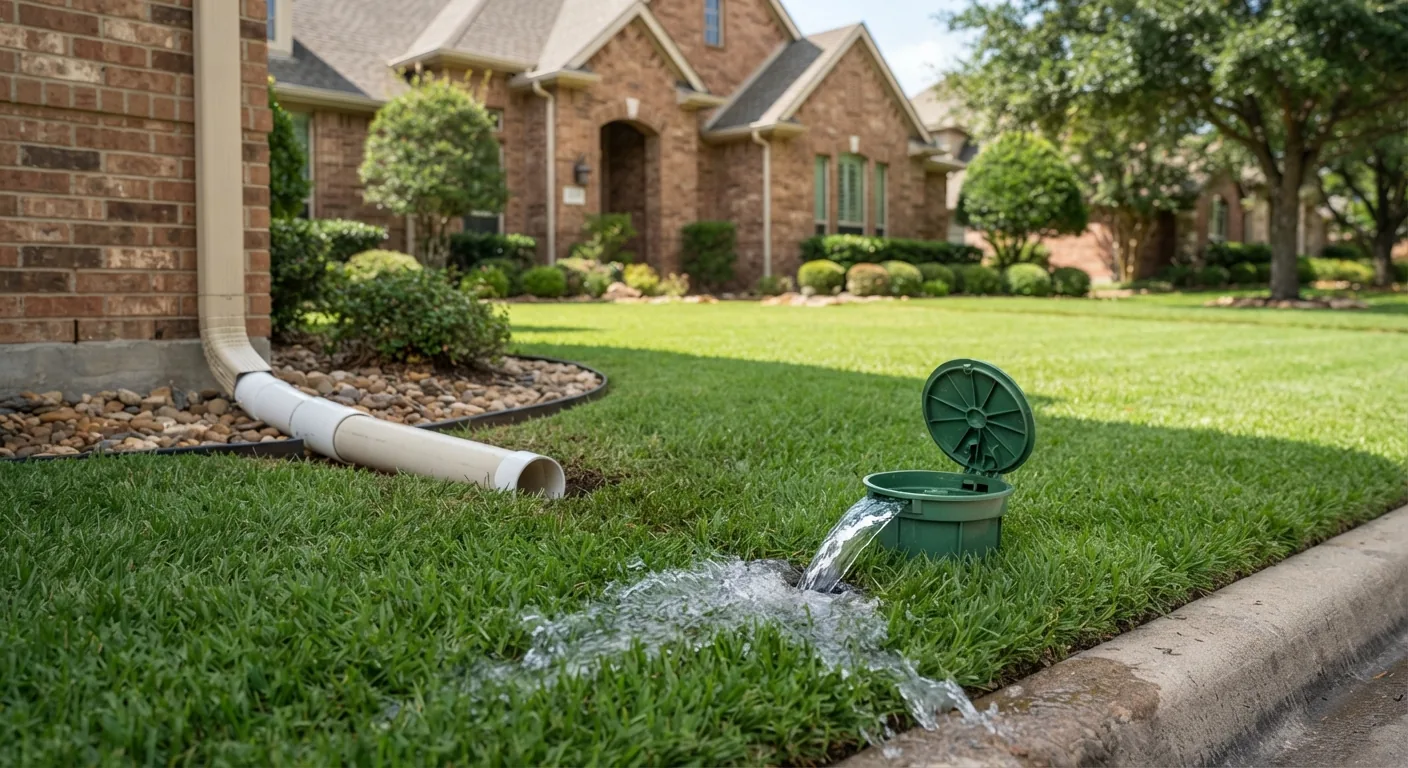
Comprehensive Foundation Water Diversion and Underground Drainage
Capturing storm runoff at the roofline is only the first phase of an effective exterior water management strategy. The final, critical phase is controlling where that water goes once it reaches ground level. When downspouts discharge directly against foundation walls or into shallow flowerbeds, the gutter system has simply concentrated hundreds of gallons of roof runoff into a single high-pressure stream. In North Texas, this practice leads directly to severe structural foundation damage, landscape washouts, and crawlspace dampness.
At Mesquite Gutter Solutions, our services directory includes specialized foundation gutter drainage and subterranean water diversion systems. Engineered specifically for the geotechnical challenges of eastern Dallas County and western Kaufman County, our drainage solutions route storm runoff through buried, smooth-wall rigid PVC piping terminating 10 to 20 feet away from your home's structural footprint.
The Geotechnical Reality: Houston Black Clay and Differential Foundation Movement
Mesquite rests within the Blackland Prairie geological formation, underlain by Houston Black clay. Geotechnical engineers classify this soil as highly expansive vertisols due to its extreme shrink-swell index:
- Severe Hydrostatic Heave: When downspouts dump roof runoff next to the house, the clay soil absorbs water rapidly and expands upwards of 10 to 15 percent by volume. This localized swelling exerts thousands of pounds of upward and lateral force against the concrete foundation slab, lifting the exterior corners while the interior remains stable—a destructive failure known as differential heave.
- Seasonal Desiccation and Settling: During dry Texas summers with temperatures exceeding 100 degrees, the soil loses moisture and shrinks, pulling away from the slab perimeter. This uneven movement causes diagonal cracks in interior drywall, exterior brick separation, and sheared plumbing pipes beneath the slab.
- The Drainage Solution: Maintaining uniform soil moisture across the entire foundation perimeter is the proven way to stabilize concrete slabs in North Texas. By capturing roof water and channeling it through subterranean pipes directly to street curbs or drainage swales, our drainage systems prevent localized saturation and protect structural integrity. For comprehensive engineering details, read our Blackland clay foundation guide.
| Drainage Method | Discharge Distance From Slab | Soil Moisture Uniformity | Lawn Care and Mowing Convenience | Long-Term Foundation Protection |
|---|---|---|---|---|
| Open Downspout Elbow | 1 to 2 feet from foundation | Extremely poor; localized saturation pocket | Moderate (elbow in mulch bed) | Severe risk of differential foundation heave |
| Hinged Aluminum Extension | 4 to 8 feet from foundation | Moderate; water still pools in yard | Poor (must be flipped up for mowing) | Moderate protection; potential trip hazard |
| Subterranean Smooth-Wall PVC | 10 to 20+ feet from foundation | Optimal; runoff fully evacuated to street | Exceptional (flush with turf; mow directly over) | Maximum protection against soil heave and settlement |
Technical Drainage Components: Why We Use Rigid Smooth-Wall PVC
Many landscape and drainage contractors cut costs by burying thin, corrugated black plastic flex pipe. While inexpensive, corrugated pipe is notorious for premature failure:
- The interior ridges create turbulence that traps roofing shingle silt and leaves.
- The thin plastic walls easily crush under lawnmowers or foot traffic.
- Soil settling creates low bellies where stagnant water stands, attracting root intrusion and mosquito breeding.
Our technicians install commercial-grade 4-inch rigid, smooth-wall PVC piping (SDR 35 or Schedule 40) designed to last for decades:
1. In-Line Debris Filter Cleanouts
Where downspouts transition into the underground system, we install durable debris filter cleanouts mounted directly to the wall. These units feature a removable stainless steel or heavy composite screen that captures any stray twigs or roof grit before water enters the underground pipe. A built-in overflow relief port ensures that if the underground line ever encounters an obstruction, water overflows safely at the wall without backing up into the gutter trough.
2. Smooth-Wall PVC Piping (Continuous Slope)
We excavate narrow, clean trenches using dedicated turf-cutting equipment that preserves your existing sod. We lay 4-inch rigid PVC pipe maintaining a laser-calibrated downward slope of at least 1/8 to 1/4 inch per foot toward the discharge area. The glass-smooth interior surface of PVC pipe maximizes water velocity, ensuring that silt and fine particles are carried cleanly through the pipe without settling.
3. Directional Sweeping Wye Fittings
Where multiple downspouts merge into a single main discharge line, we exclusively utilize 45-degree directional wye fittings and long-radius sweep elbows. We never use sharp 90-degree plumbing tees that create turbulence and collect clogs.
4. Spring-Loaded Pop-Up Emitter Valves
At the designated discharge area—typically near the street curb, sidewalk, or natural storm drainage swale—we install a heavy-duty pop-up emitter valve set completely flush with the lawn:
- During a rain event, the weight and hydrostatic pressure of incoming water pushes the emitter lid upward, releasing stormwater in a smooth, sheet-flow pattern across the turf.
- Once precipitation ceases and water drains completely, an internal stainless steel spring snaps the lid shut.
- The closed lid keeps out lawn clippings, mulch, rodents, and leaves, while allowing lawnmowers and trimmers to pass directly over it without damage.
Integrated Drainage Solutions: French Drains and Catch Basins
For properties with complex grading challenges, standing water in low-lying side yards, or roof valleys that shed massive volumes of water, we integrate subterranean downspout lines with broader landscape drainage components:
- Surface Catch Basins: Low-profile collection grates installed in flowerbeds or patio low spots that capture surface ponding and feed directly into the buried PVC main line.
- Perforated French Drains: Gravel-encased perforated PVC pipes wrapped in non-woven geotextile fabric that collect subsurface groundwater along retaining walls or uphill property boundaries, keeping foundations dry.
- Sump Basin Discharge Integration: For homes with basement or crawlspace sump pumps, we tie pump discharge lines directly into the subterranean gravity drain, providing a single, clean underground exit path.
Synergy With High-Capacity Gutter Systems
Subterranean drainage works in direct partnership with your roofline water collection components:
- Seamless Trough Sizing: Ensure maximum storm capture by pairing underground drains with high-capacity 6-inch seamless gutters.
- Oversized Downspout Inlets: Upgrade downspout vertical runs with oversized 3x4-inch downspouts and extensions to ensure water evacuates the roof without bottlenecking.
- Debris Defense: Prevent organic matter from entering drainage lines by outfitting your system with surgical-grade micro-mesh gutter guards.
Local Service Coverage in Mesquite and Surrounding Communities
Our drainage excavation and installation units operate throughout eastern Dallas County and western Kaufman County, providing prompt dispatch and clean jobsite protocols across these primary service areas:
- Mesquite Service Territory: Subterranean drainage installations across ZIP codes 75149, 75150, and 75181.
- Garland Area: French drains and downspout burial for northern Dallas County residential properties.
- Sunnyvale Area: Large-scale estate drainage systems and long-run PVC lines.
- Balch Springs Area: Foundation protection channels and pop-up emitter installations along Lake June Road.
- Forney Corridor: Builder-grade drainage corrections and subterranean routing in expanding Kaufman County master-planned developments.
We also provide dedicated neighborhood-level service tailored to local topography and soil conditions in Creek Crossing, Falcon's Lair, and Town East.
Schedule Your Foundation Gutter Drainage Evaluation
Safeguard your foundation slab and protect your landscaping from destructive storm runoff. Contact our Mesquite field dispatch desk today to speak directly with an exterior water management specialist, ask technical questions, or schedule an on-site evaluation:
- Direct Dispatch Hotline: (469) 564-0263
- Operating Hours: Mon-Sat: 7:00 AM - 7:00 PM (Emergency Storm Dispatch Available)
- Digital Consultation Request: Submit your project details through our secure contact consultation form.
Transparent Pricing and Diagnostic Disclosure
Project costs, diagnostic fees, and installation rates displayed or discussed are regional market estimates for Mesquite, TX and surrounding jurisdictions. Estimates are for budgeting purposes only. Actual prices vary based on on-site conditions, roof pitch, linear footage, material gauges, and accessibility.
Every service call begins with a comprehensive on-site physical evaluation and a binding, clear written estimate before any work commences. No surprise fees, hidden travel charges, or unapproved billings.